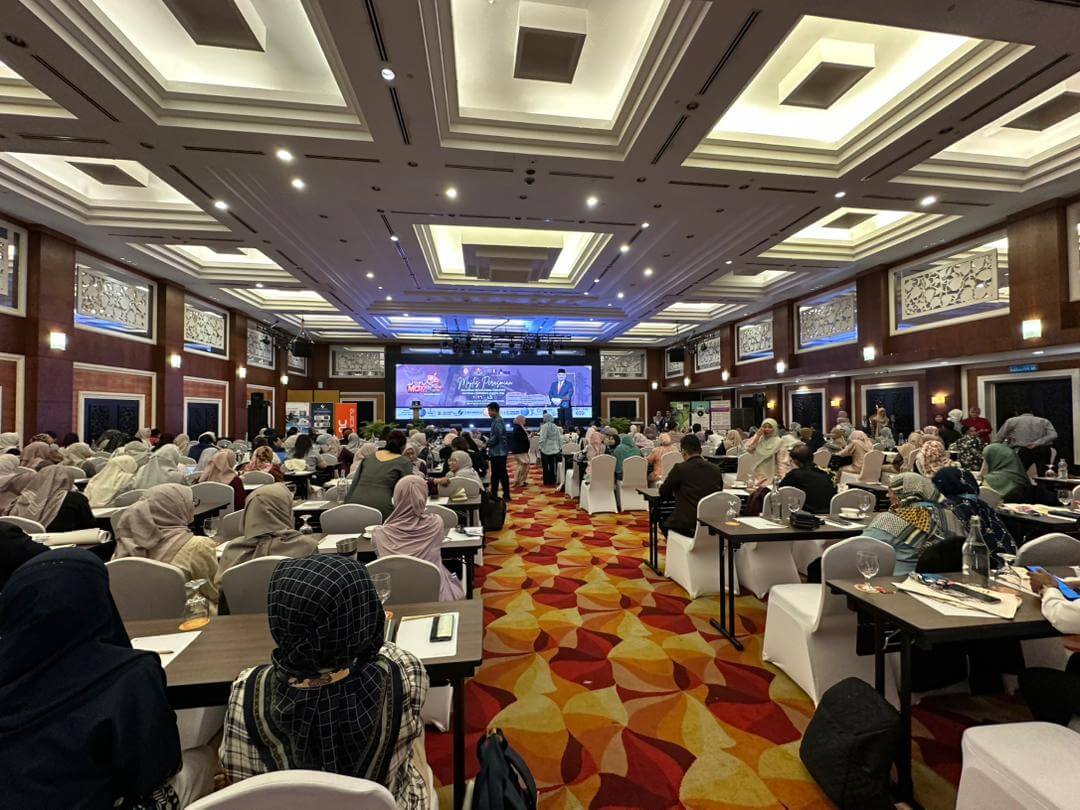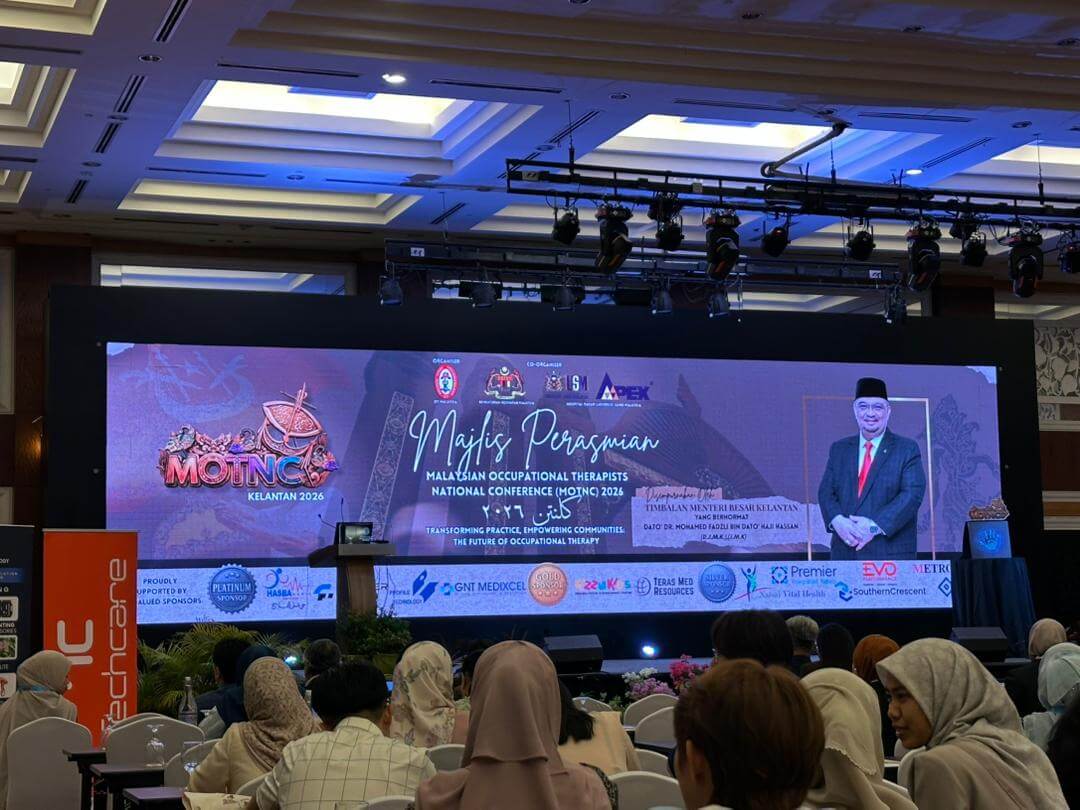
From 25–28 April 2026, our healthcare-tech subsidiary MedicalMet participated in the Malaysian Occupational Therapists National Conference (MOTNC) 2026 at Hotel Perdana, Kota Bharu. The four-day gathering — themed “Transforming Practice, Empowering Communities” — brought together public-sector therapists, university hospital teams, private practitioners, researchers, and students from across Malaysia and the Southeast Asian region. The opening was presided by the Timbalan Menteri Besar Kelantan, Dato’ Dr. Mohamed Fadzli bin Dato’ Haji Hassan.
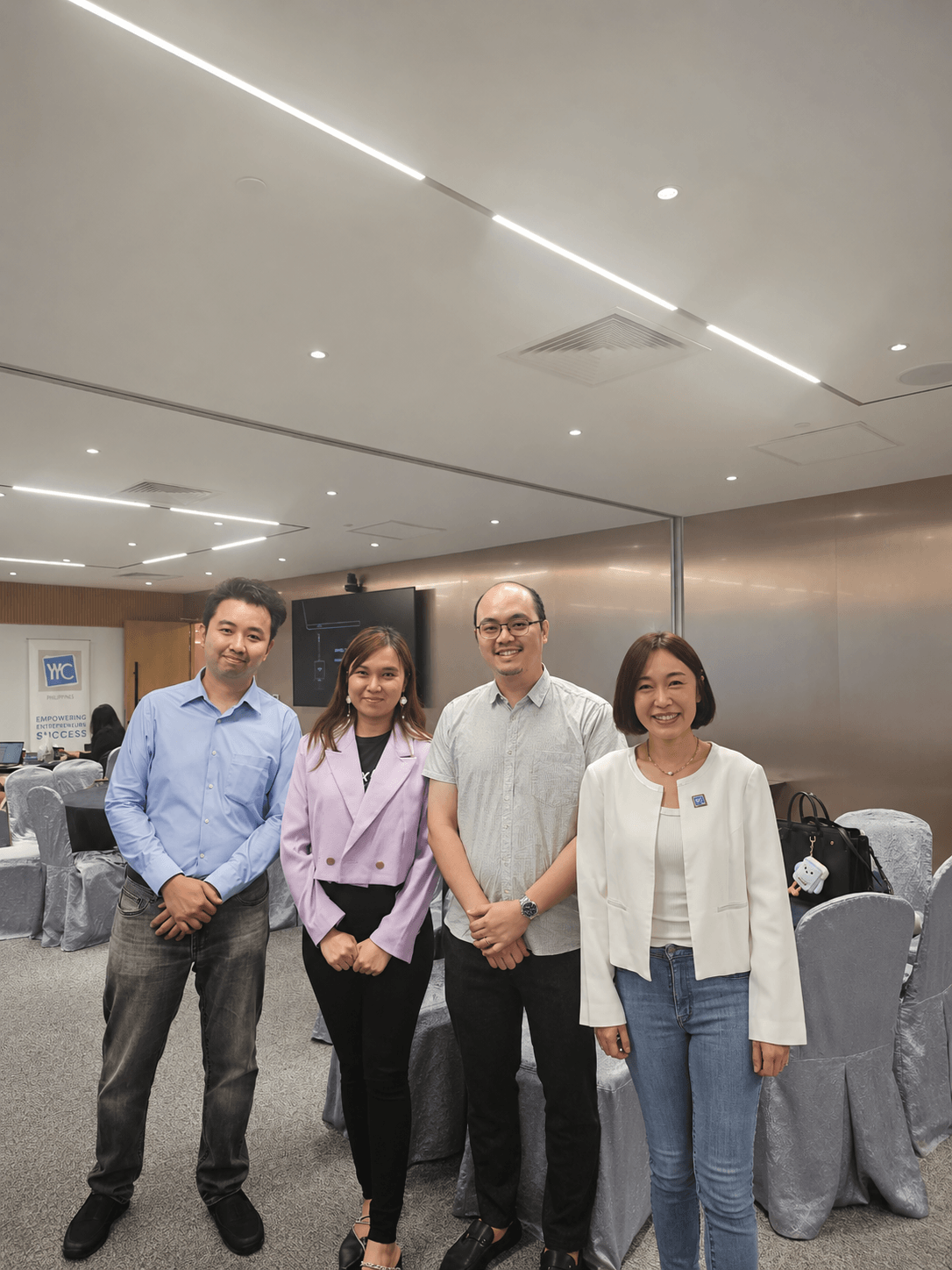
Our team attended as a participant and exhibitor, gathering direct feedback from clinical practitioners and presenting how AI is changing day-to-day occupational therapy practice. Here is the gist for AGM Group clients and any healthcare operator thinking about where AI fits into a clinical workflow.
Why an Occupational Therapy Conference Matters to Advisory Apps
Healthcare is one of the largest verticals across the AGM Group portfolio, and OT is a clinical specialty that mainstream clinic software has historically ignored. Standard systems are designed for 10-minute GP consultations with simple invoicing — a poor fit for occupational therapy’s 45–60 minute sessions, recurring 6–12 week treatment blocks, and rich documentation requirements (functional assessments, goal tracking, ADL scoring, sensory profiles).
Conversations on the exhibition floor confirmed what we suspected: paediatric OT clinics still rely on paper assessment forms, A4 milestone trackers, and WhatsApp screenshots for parent updates. Adult rehabilitation services juggle handwritten goal sheets, MS Word progress reports, and inconsistent calendar reminders. The opportunity for purpose-built software — and AI on top of it — is enormous.
Three Places AI is Quietly Changing OT Practice in 2026
The conference’s AI track surfaced three high-leverage applications. None of them replace the therapist. All of them give the therapist more minutes back per session.
1. Voice-captured documentation
Therapists narrate session findings while still in the room with the patient. AI structures the audio into objective findings, intervention summary, and next-session goals. MedicalMet customers using AI Treatment Notes have already processed over 10,000 voice-captured notes, with paediatric OTs and physiotherapists as the heaviest users. OTs report 8–12 minutes saved per patient session — meaningful when a therapist runs eight sessions a day.
2. Assessment scoring
Raw observations get converted into normed scores faster, freeing hands-on treatment time. AI does not replace clinical judgement, but it removes the time tax of manual scoring sheets.
3. Home-programme adherence
AI-driven WhatsApp reminders and parent check-ins improve treatment plan completion. MedicalMet customer data shows WhatsApp reminders reduce no-shows by 90% — a number that compounds across long treatment blocks where missed sessions break clinical momentum.
What an OT-Friendly Clinic System Actually Needs
The exhibition-floor conversations crystallised a feature checklist that Advisory Apps’ healthcare-tech team is already carrying back into our roadmap discussions. If you are evaluating clinic software for any therapy-led practice, the must-haves look like this:
- Session-based scheduling with 30-, 45- and 60-minute slots, plus weekly recurring bookings across 6–12 week treatment blocks.
- Structured electronic medical records with OT-specific templates: functional assessments, goal tracking, ADL scoring, sensory profiles.
- AI-assisted treatment notes with voice capture and automatic prose structuring.
- Family communication via WhatsApp reminders and a parent app for progress updates.
- Prepaid package management for treatment blocks, with redemption tracking that does not depend on staff memory.
- Outcomes reporting at the clinic level — sessions delivered, no-show rate, average sessions per patient, revenue per therapist, programme completion rate.
This list extends beyond OT. The same architecture supports physiotherapy, speech therapy, ABA centres, and any allied-health practice that runs on long sessions and treatment blocks rather than walk-in consultations.
Recognition from Persatuan Terapi Cara Kerja Malaysia
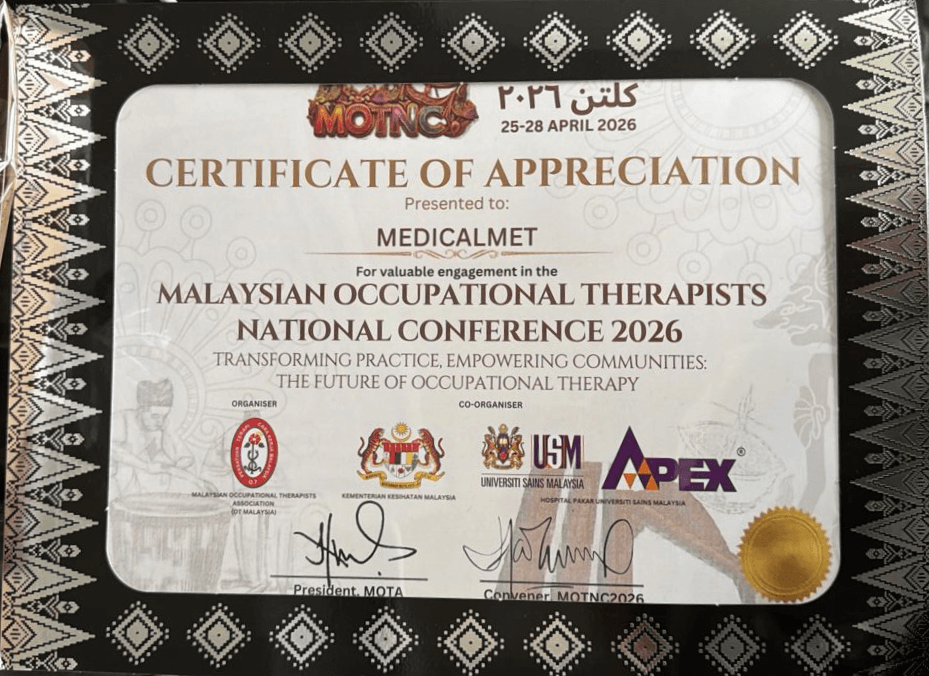
We are grateful to have received a Certificate of Appreciation from Persatuan Terapi Cara Kerja Malaysia for MedicalMet’s participation. The recognition matters less for the certificate and more for what it represents: a clinical association extending its hand to a software company because the conversations were useful both ways. That is the relationship the AGM Group wants to keep building across every healthcare specialty we serve.
What This Means for the Wider Advisory Apps Portfolio
The patterns from MOTNC 2026 — purpose-built workflows, AI as a productivity multiplier rather than a replacement, mobile-first patient communication — show up across our artificial intelligence and mobile apps practices, not just healthcare. Voice-captured documentation is just as relevant for legal, audit, and field-service work. WhatsApp reminders are just as relevant for dealerships, dental clinics, and beauty salons.
For the full clinical deep-dive — including the OT-specific feature breakdown and a 90-day action checklist for OT clinic owners — read the original write-up on the MedicalMet blog.
Planning AI documentation, voice-captured notes, or WhatsApp-driven patient engagement for your own healthcare practice or service business? Book a free 30-minute consultation with our team and we will walk you through how it works in production.